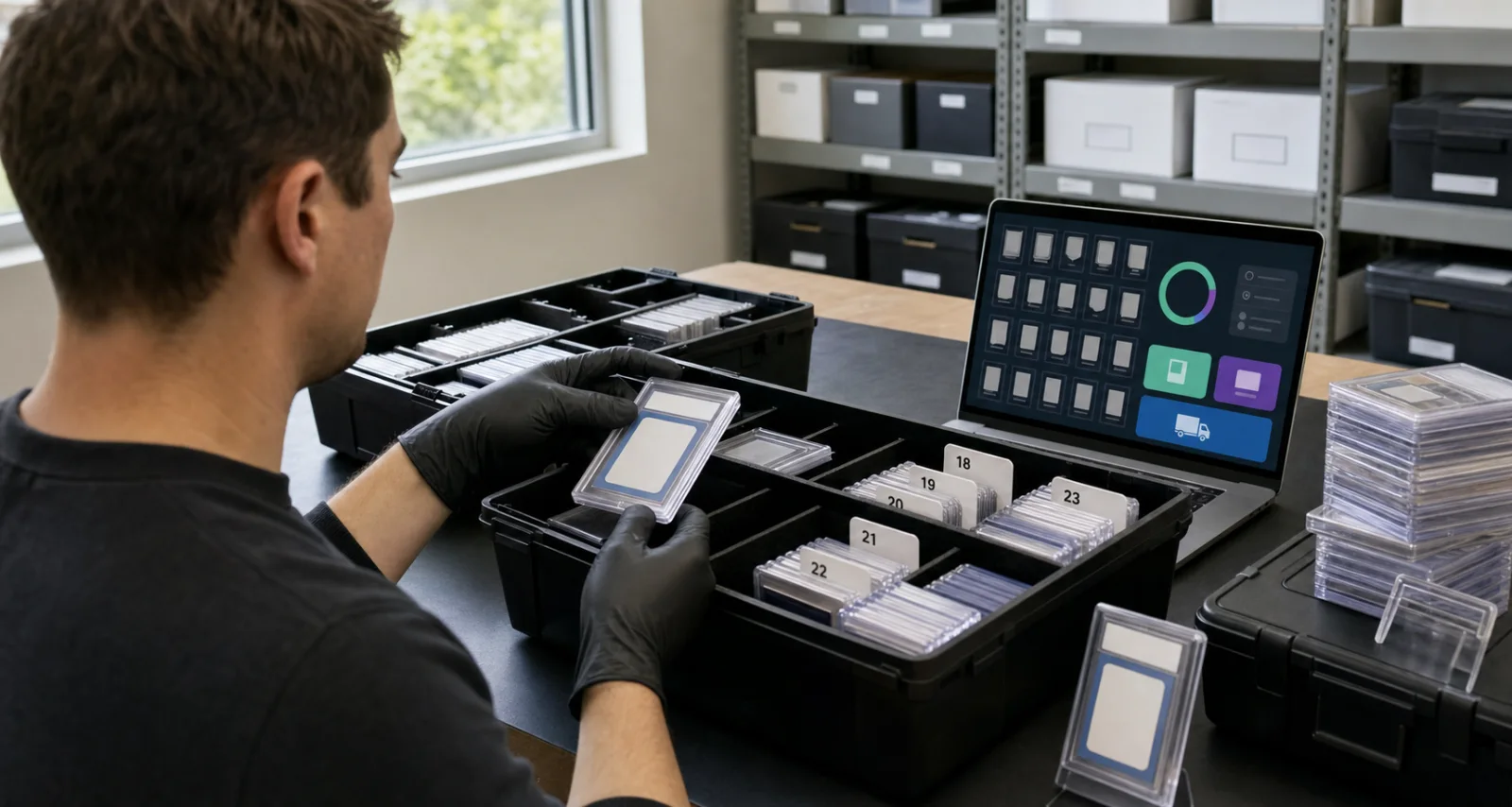
Card Vault Explained: Storage, Ownership and Shipping
A sports card can belong to a collector while somebody else holds the physical collectible. A card vault connects those two facts through an online record used to manage the card. Before trusting that record, check who owns the card, who has custody, what must happen before release, and which protections apply during storage and transit. The word “vault” alone settles none of those details.
Card Vault Explained in Plain English
Open a Vault page and two facts may be true at once: the sports card is assigned to a collector, and the physical collectible is somewhere else. A card vault links that real card with an online account used to manage it. A deposit vault receives an eligible card before associating it with an account. A platform-linked workflow may assign the card first and arrange release later. Neither assignment nor an ownership-record update is a shipment. Here, “card vault” excludes local shops, binders, home safes, and video-game features.
The useful test is not what the screen is called. Match the entry to a physical collectible, identify the instructions the owner may give, and find the delivery route. Pullmarket puts those answers in the Terms governing assignment, Vault actions, and fulfillment. The dashboard can show what has been assigned; the contract says what that assignment permits and how fulfillment works.
An account entry earns trust by being specific enough to distinguish the managed collectible and expose the available actions. Depending on the item, the identifying fields may include the card, set, player, grade, certification details, or other information. Those fields can associate the record with a collector while the physical card remains elsewhere.
The deposit model is easy to see in PSA’s description of its Vault. Eligible collectibles enter physical storage and are associated with a customer through a Vault ID. The account holder can then manage or retrieve them. Pullmarket starts with a platform assignment instead of a general customer deposit. Both screens represent physical collectibles; neither screen replaces the card itself.
“Vault” does not describe a fixed bundle of services. A slab-only intake policy and a raw-card route are different products, even if both use that label. The intake rules determine which formats qualify. Grading access, marketplace tools, storage arrangements, transit protection, fees, and release rights each need their own current documents; none follows automatically from the name.
How Does a Sports Card Vault Work?
Shipping makes the sequence easiest to understand. A carrier cannot scan the package until the provider has approved release, located the physical card, and packed it. Earlier events—intake or assignment, acceptance, account association, and remote management—can occur while the collectible stays put. The account may identify the card before shipment and may record a new owner without requiring physical movement.
For a conventional deposit vault, follow the physical card rather than the screen:
- The card arrives. The collector or an authorized party sends it through an approved submission route. The provider logs receipt, checks the item against current format and condition rules, and may begin custody or coverage at that point under its documents.
- An accepted card stays in storage. Acceptance links it to the collector’s account. The account holder can use the management actions allowed by the governing terms, but those account actions do not require the card to travel.
- A release instruction starts the outbound trip. The collector identifies the item, supplies any required payment and delivery information, and requests retrieval. Staff must find and pack the card before handing the package to a carrier.
Pullmarket starts elsewhere in that sequence. A card from one of its online packs with real physical card outcomes is assigned to the buyer’s Vault rather than mailed in through a general deposit service. Where the card is held or sourced remains a separate question addressed in the provider field reference below.
PSA’s Vault Terms permit a completed transaction to be recorded through the Vault’s ownership books without moving the stored card. The account attribution changes; the collectible can remain in the same physical location.
Retrieval begins a new physical event. It does not make the card real or necessarily create the collector’s ownership interest. The operator must locate the item, complete the required checks, pack it, and transfer it to a carrier.
Pullmarket documents how a physical pull reaches the owner’s Vault and what can happen next. That process is better evidence than an assumption drawn from a dashboard image.
Who Owns a Card in a Vault?
Ask two separate questions: “Is this my card?” and “Where is it now?” The first is answered by the assignment or purchase record and the ownership terms. The second belongs to custody, fulfillment, release, and shipping records. An account holder may direct only the actions the platform permits. A custodian can control a stored item without owning it, and carrier possession begins only at outbound handoff.
| Question to settle | Relevant role | Record to inspect |
|---|---|---|
| Whose collectible is it? | Owner | Assignment record, purchase record, and ownership terms |
| Who may issue instructions through the platform? | Account holder | Account rules and the list of authorized actions |
| Who stores, reserves, or supplies it before release? | Custodian or fulfillment source | Custody and fulfillment provisions |
| Who has the outbound package during transit? | Carrier | Shipping, coverage, and claims terms |
Physical possession needs no platform terminology: the card is in your hands or on your desk. A card held in a facility, supplier channel, or partner vault is not in your possession, even when the applicable account record recognizes you as its owner.
A permitted ownership-record transfer makes the distinction visible. The owner shown in the account can change while the collectible remains in the same storage location. Account history and custody records describe different events; neither one substitutes for the shipping record after release begins.
Use the account screen to match the collectible and see which instructions are available. To establish location, release status, or carrier handoff, consult the custody and shipping records. Physical control of storage, by itself, does not establish title.
PSA states that accepted items are held for the account holder’s benefit. PSA controls the stored object and its release process, while the account holder retains the interest described in the contract. That is custody without automatic provider ownership.
Pullmarket’s assignment record answers which physical collectible is associated with the buyer and which actions may be available. It does not, by itself, name the card’s current location or custodian. The Pullmarket Terms supply the holding, sourcing, fulfillment, and release rules behind that entry.
Seeing a card in a Pullmarket Vault is therefore not proof that it is already inside a Pullmarket-operated facility. The entry identifies the assigned physical collectible. Its fulfillment route comes from the Terms, not from an inference about the dashboard.
Does Vaulting Mean a Card Is Graded?
No. Vaulting concerns the management or storage of a collectible. It does not assess condition, improve the card, or convert raw cardboard into a slab. Calling a service a “graded card vault” describes the format it accepts or the collector’s use case; it does not mean the vault performs grading automatically.
The format rule at PSA is narrow. As checked August 10, 2026, PSA’s Vault policy accepts eligible cards encapsulated by PSA, SGC, BGS, and CGC. Raw cards and unsupported holders are excluded under its published intake rules.
Fanatics Collect’s Vault documentation, checked the same date, describes approved workflows for authenticated cards, raw cards routed through a grading partner, oversized slabs, wax, and other approved collectibles. Those different eligibility rules show why “vaulted” cannot be used as shorthand for “graded.”
Pullmarket outcomes also vary by item. Some cards are raw; others are encapsulated by recognized third-party graders such as PSA, CGC, or SGC. The card’s Vault destination does not decide its format.
For a slab, match the grader and certification details in the record to the physical item before release. For a raw card, do not treat a dashboard image as a condition grade or a promise of grading eligibility. The assignment record identifies what was pulled.
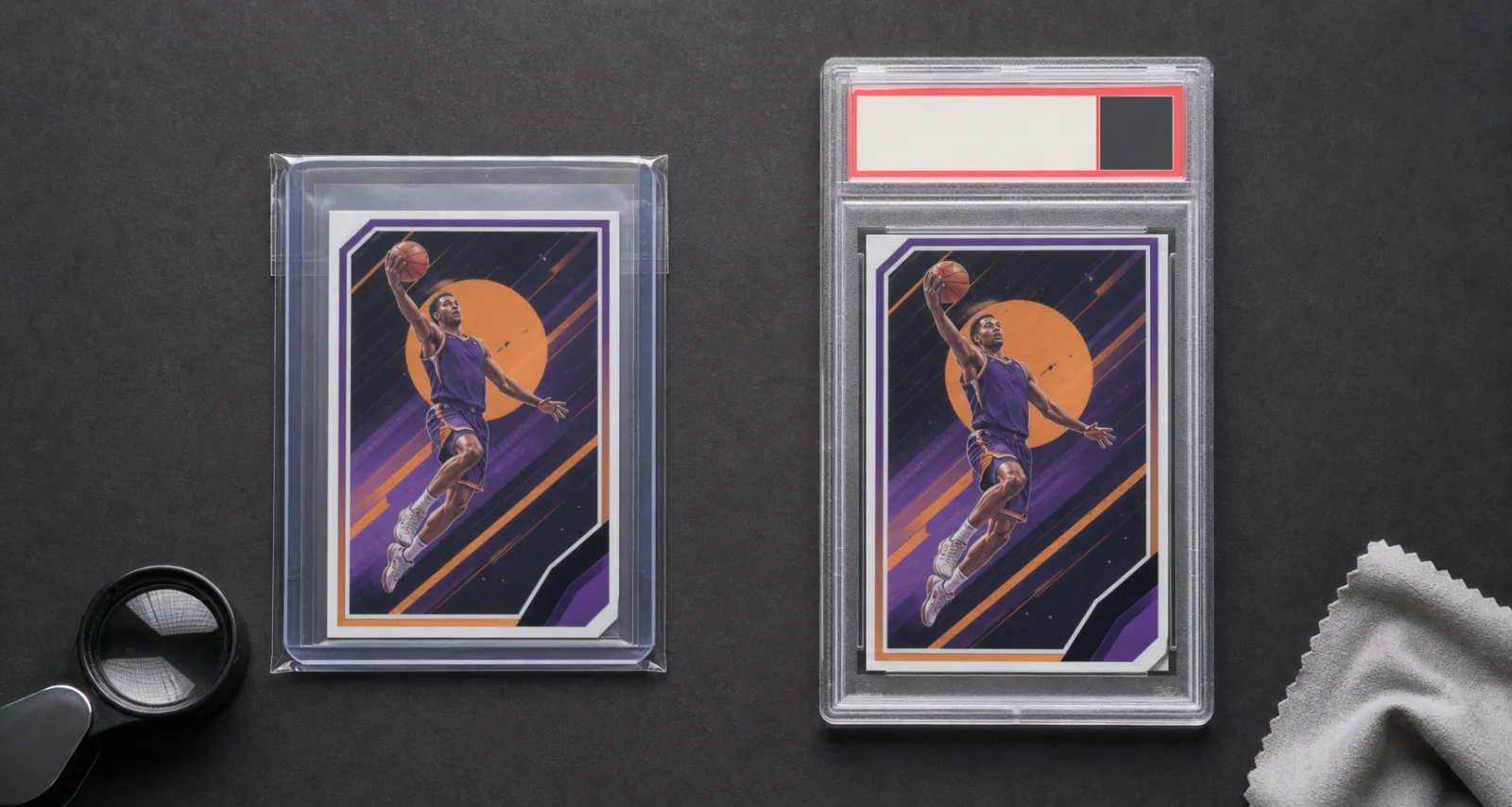
If format affects your collection plan, inspect the pack and card details before opening, then verify the assigned item afterward. The guide to graded versus raw cards explains the physical differences. The graded cards guide covers slab labels and certification records. A Vault image alone establishes neither format nor condition.
Are Vaulted Cards Insured?
Coverage can change when a package reaches the provider, enters accepted storage, leaves the facility, or passes to a carrier. There is no universal door-to-door insurance promise for vaulted cards. Current valuation rules, exclusions, and claims procedures control each stage.
As of August 10, 2026, Pullmarket, PSA Vault, and Fanatics Collect published materially different answers across custody, accepted formats, coverage, fees, and release. The three workflows below are a dated field reference, not a market survey or best-vault ranking.
Each populated cell is tied to a controlling or operational source. Where a reviewed source gives no answer, the table says “not stated in reviewed source” instead of borrowing another provider’s policy.
| Audit field | Pullmarket | PSA Vault | Fanatics Collect Vault |
|---|---|---|---|
| Workflow type | Pack-to-Vault assignment with hybrid custody and fulfillment under the Pullmarket Terms. | Deposit and storage service for eligible encapsulated cards, with account management and retrieval (PSA Vault). | Vault storage and management workflow supporting platform purchases and approved outside submissions (The Vault). |
| Accepted inventory | Pullmarket-assigned physical card outcomes; cards may be raw or third-party graded. External customer deposits are not applicable to the reviewed workflow. Checked August 10, 2026; Terms. | Eligible slabs from PSA, SGC, BGS, or CGC; raw cards and unsupported holders are excluded. Checked August 10, 2026; PSA Vault. | Approved inventory can include authenticated cards, raw cards routed through a grading partner, oversized slabs, wax, and other approved items. Checked August 10, 2026; Fanatics Vault. |
| Entry route | Assignment after a Pullmarket pack is opened. The collectible then appears in the buyer’s Vault under the Terms. | Published routes include mail, a grading submission, marketplace checkout, and selected events (PSA Vault). | Platform purchases and approved third-party shipments are documented intake routes (Fanatics Vault). |
| Owner or account record | The assigned collectible belongs to the buyer subject to the governing Terms, which define the available actions and fulfillment obligations. | The submitter must be the lawful owner or an authorized representative; accepted items are stored on the account holder’s behalf (PSA Vault Terms). | Account imagery and management tools are documented. Detailed legal-title allocation was not stated in the reviewed help-center sources. |
| Physical custodian or fulfillment source | Pullmarket or a custodian may hold the item; other assignments may be reserved through verified supplier or partner-vault inventory and sourced at redemption (Terms, §5.5). | PSA receives and stores accepted items under its Vault Terms. | Fanatics documents physical Vault storage and management of accepted inventory (Fanatics Vault). |
| Coverage by stage | Pullmarket-specific storage insurance, inbound coverage, outbound coverage, climate control, and valuation limits were not stated in the reviewed Terms as of August 10, 2026. Do not infer them. | Inbound packages are excluded before confirmed receipt unless separate coverage is arranged. After confirmation, coverage is capped at the lower of fair market value or the applicable maximum insured value. Checked August 10, 2026; PSA Coverage. | Vaulted items are described as insured at appraised value. The shipping page says shipping insurance addresses arrival condition but does not cover loss or theft. Checked August 10, 2026; shipping overview. |
| Fee categories | Applicable shipping or fulfillment charges may be required; fixed public amounts were not stated in the reviewed Terms. Checked August 10, 2026; Terms. | PSA publishes separate shipping-and-handling, per-item withdrawal, and early-withdrawal categories. Current amounts must be checked before release. Checked August 10, 2026; PSA FAQ. | The page lists intake categories including $0 for qualifying authenticated cards, $3 for sub-$50 items, $15 for oversized items, and $25 for larger items. It also describes 1% and 3% fulfillment categories tied to removal timing. Checked August 10, 2026; Fanatics Vault. |
| Retrieval or release | The owner requests eligible shipment. Release may depend on payment, verification, availability, destination eligibility, charges, carrier availability, and risk review (Terms, §7). | Retrieval begins through My Collection on the website or app and remains subject to procedures and costs (PSA FAQ; Vault Terms). | The user selects items in the web or app Vault, starts the Ship or Retrieve workflow, supplies delivery information, and pays the fulfillment invoice (shipping overview). |
| Published processing time | No fixed Pullmarket pull-and-pack or delivery time was stated in the reviewed Terms as of August 10, 2026. | No fixed retrieval-processing time was stated in the reviewed PSA sources used for this audit as of August 10, 2026. | Five to ten business days for pull-and-pack after the fulfillment invoice is paid. Checked August 10, 2026; reverify before relying on it (shipping overview). |
| Unavailable-item remedy | Pullmarket may source the same item through another channel, provide a comparable collectible of equal or greater market value, or apply another remedy required by law (Terms, §§5.5 and 7.2). | Not applicable to Pullmarket-style displayed-outcome sourcing. Loss, release, and delivery issues are governed by the PSA Vault Terms. | A comparable remedy for an unavailable displayed pack outcome was not stated in the reviewed help-center sources. |
| Controlling documents | Pullmarket Terms, especially §§5.5 and 7–9. | PSA Vault, Vault Terms, Coverage, and FAQ. | Fanatics Collect Vault and shipping overview. |
Read Coverage by Stage, Not by Slogan
A package headed to PSA crosses an important boundary at confirmed receipt. PSA’s published coverage excludes the inbound package before that confirmation unless the customer arranges separate protection. Coverage after receipt remains subject to valuation rules and maximum limits.
Fanatics draws another line during outbound fulfillment. Its documentation describes vaulted items as insured at appraised value, but its shipping-insurance language addresses arrival condition and excludes loss or theft. The current carrier and claims rules matter more than a general “insured” label.
The reviewed Pullmarket Terms do not establish a universal storage or shipping-insurance promise. Pullmarket-specific coverage remains “not stated in reviewed source” until a current document or account quote supplies it.
Count Withdrawal and Shipping Costs Separately
“Free storage” covers one possible cost. The full path can include intake, storage or maintenance, transaction, withdrawal or early-release, handling, shipping, and separately purchased coverage. A zero in one category says nothing about the others.
Price the route you expect to use. Long-term remote management and a quick retrieval create different cost profiles. Use the provider’s current documents because fee schedules can change.
How to Ship Cards From a Vault
Choosing Ship creates a release request; it does not create a carrier scan. The collectible must clear the provider’s eligibility checks, destination rules, and charges before staff pull and pack it. Processing ends at carrier handoff. Transit begins there, so a quoted processing window and a delivery estimate measure different parts of the trip.
Two Stops Before You Pay for Release
Stop on any item mismatch. The card, grade, certification number, and quantity should agree with the account entry. Resolve a discrepancy while the collectible remains in storage rather than continuing with the release request.
Then check whether the route is open. Clear any payment issue, account hold, verification request, or other restriction. Enter the complete delivery address and confirm that the provider serves that destination before paying.
The quote deserves a line-by-line read. Withdrawal, handling, shipping, signature, and optional-coverage charges may appear separately rather than as one release price.
Use the clock published by the provider that actually holds the card. Another vault’s processing estimate says nothing about this request. Save the applicable remedy and claims rules at the same time, while the collectible is still in storage and before any transit problem can arise.
PSA begins retrieval through My Collection. Fanatics uses a Ship or Retrieve workflow followed by invoice payment. Pullmarket’s Terms establish its shipment conditions, but the reviewed research does not verify exact button labels or screen order.
For Pullmarket, an account entry can appear before every outbound condition is complete. Shipment may depend on payment, identity and address verification, collectible availability, destination eligibility, applicable charges, carrier availability, and fraud or risk review.
Fanatics published a five-to-ten-business-day pull-and-pack window after invoice payment when checked August 10, 2026. That timing applies to Fanatics processing, not every vault and not Pullmarket.
After the Carrier Receives It
Handoff changes who has the package. Carrier service, signature requirements, package treatment, and claims procedures can vary with appraised value, package size, destination, and address type. A provider may finish processing while delivery remains underway.
Keep the release confirmation, item description, invoice, any supplied tracking record, and photographs taken after arrival. If retrieval supports an off-platform transaction, complete the inspection and documentation work in the guide to selling sports cards online before committing to the sale.
An “insured shipping” label does not settle responsibility for loss, theft, delay, or condition damage. The provider, carrier, valuation, exclusions, and claim-filing terms for that shipment control the answer.
What Pullmarket’s Vault Means After a Pull
A Pullmarket Vault entry names the real physical collectible assigned after the pack opens. Read its details before choosing an action: the card may be raw or third-party graded, and enabled options may include holding it, requesting eligible shipment, trading where available, or considering an eligible sellback. The assignment identifies the collectible and the owner’s account. It does not prove that the card is already in a Pullmarket-operated facility.
Where the Physical Card Comes From
Section 5.5 of the Pullmarket Terms separates two fulfillment routes. Pullmarket or a custodian may already hold the assigned card. Otherwise, the assignment may be reserved against verified supplier or partner-vault inventory and sourced at redemption. Both routes end with a real physical collectible. Neither route means every possible pull was pre-stocked inside one Pullmarket facility, and shipment remains subject to the Terms.
Sellback has a different result from shipment: an accepted offer returns Pullmarket Gems, closed-loop store credit that cannot be withdrawn as cash. The online card pack process separates those account credits from the physical cards assigned after a pull.
Choose the Action That Fits the Card’s Next Job
The menu matters only in relation to what you plan to do with the collectible:
- Nothing physical needs to happen yet: Hold it in the Vault and manage it remotely.
- You need the card in hand: Request eligible shipment for display, close inspection, cataloging, or another physical task.
- Another collector is involved: Check whether trading is enabled for that item and account before relying on the feature.
- You would rather not retain the card: Review any eligible market-based sellback offer and decide whether non-cashable Gems fit the next purchase you intend to make.
A Pullmarket sellback is different from selling a sports card online. Under sellback, the collectible transfers according to the platform’s terms and the owner receives Gems. An outside sale instead creates separate listing, payment, shipping, fee, and dispute responsibilities.
The originally displayed physical specimen is not guaranteed if it cannot be fulfilled. In that situation, Pullmarket’s Terms permit sourcing the same item through another channel, providing a comparable collectible of equal or greater market value, or applying another remedy required by applicable law. The Terms do not promise that the owner can select the remedy.
Pullmarket publishes pack odds before purchase. Collectors can inspect current packs and their published odds, but this article does not prove that any exact card, sport, grader, or format is currently pullable. The current pack details control that question.
Vault or Ship? Wait Until the Card Has a Physical Job
Leave the card vaulted while its next task fits the account. Ship when that task needs the collectible itself. Remote monitoring or an unsettled trade or sellback decision can happen without added movement. Display, close condition work, photography, home cataloging, and an in-person handoff require direct possession.
| Immediate need | Practical route | Reason |
|---|---|---|
| Monitor or manage the card remotely | Leave vaulted | No physical-card task is ready |
| Consider an enabled trade or eligible sellback | Leave vaulted until decided | Shipping would add cost and handling before the choice is settled |
| Add the card to a display or home inventory | Ship | The collector needs direct possession |
| Inspect a raw card before a grading submission | Ship | An account image cannot replace a physical condition review |
| Complete an in-person trade | Ship | The other collector needs access to the physical card |
For an outside sale, the destination channel sets the practical requirements. Find out whether it requires possession or accepts provider-managed fulfillment. Check whether the buyer or venue needs photographs or inspection records unavailable through the account view. Those demands should be compared with the vault’s release process and charges. Shipment makes sense when it supplies evidence or possession the transaction actually requires.
A raw card headed toward grading presents a narrower trigger. Match the item record before release, obtain the complete delivery quote, and read the provider’s current processing language and unavailable-item remedy. After arrival, document the delivery and inspect the card closely. The grading decision follows that physical review; the Vault image is not a substitute for it.
An already-slabbed card calls for a different check. Match the card and certification details to the entry. If the current custody and protection terms remain acceptable and no display or in-person transfer is planned, the account may already support the immediate job. Shipping would add handling and cost without advancing that plan. Revisit the release and coverage terms before relying on the arrangement for long-term storage.
Display, close inspection, photography, home cataloging, and an in-person trade all use possession directly. Remote account management does not. Planning a sale requires its own check against the destination channel, and the guide to selling sports cards online covers that decision.
Four variables decide the route: the next physical task, release cost, expected handling, and current protection terms. Vaulting can avoid unnecessary movement during remote management. Shipping gives the collector direct control when a physical-card task is ready.


Browse online sports card packs. New here? See how Pullmarket works.