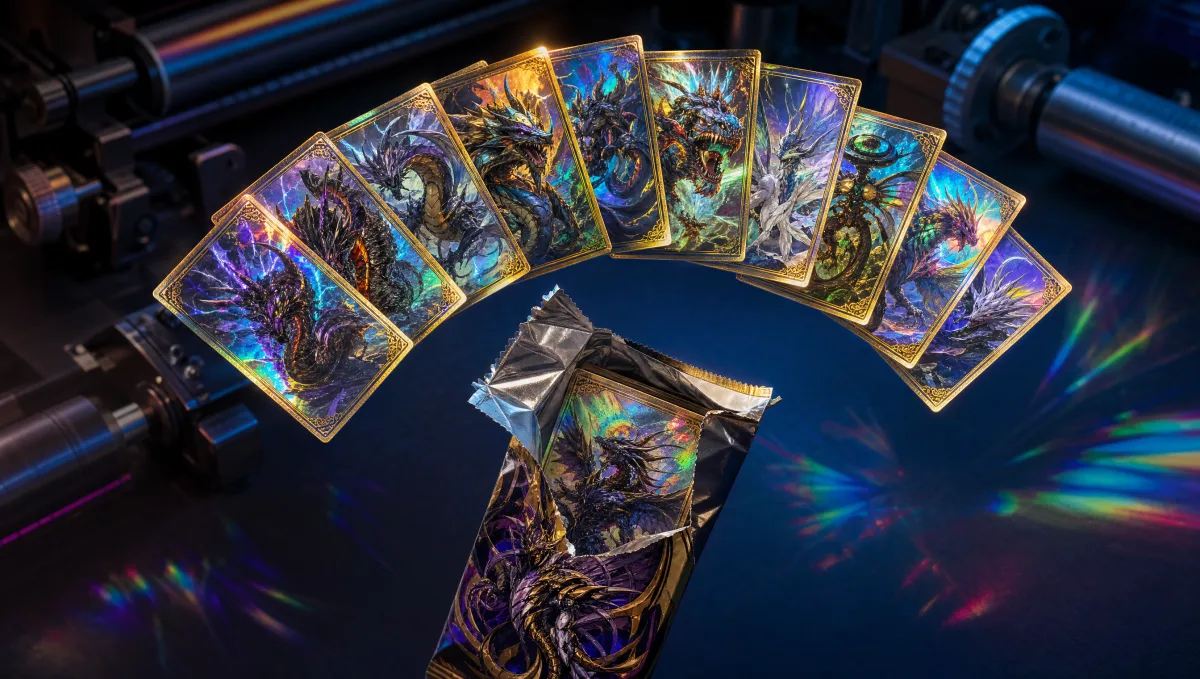
Pokémon God Pack: What It Is, the Odds, and the 151 God Pack
A Pokémon "god pack" is a booster pack in which every card slot has been filled with an Illustration Rare or higher rarity card, produced as a statistical anomaly of the printing and packaging process and confirmed in a defined list of Japanese and English sets since 2019. It is not a product you can buy, a prize you can claim, or a feature of any specific store — it is a print-line outcome that occasionally happens at the factory when a single booster pack rolls off the line filled with cards from rarity slots normally distributed at most once per box. This guide is the one the current top of the search results misses: what a god pack actually is, which sets are confirmed to produce them, the publicly-cited estimated pull rates and where those numbers come from, how to verify a pack you think you pulled, and the three decisions a collector typically makes once a real one is in hand. Pullmarket — operated by Pullmarket LLC — is upfront about one thing right away: god packs are not something Pullmarket sells, because god packs are not something anyone sells.
Part of: Complete Pokémon Cards Guide — the pillar overview of every era from 1999 WOTC to the 2025 Mega Evolution Pokémon TCG.
A Pokémon god pack is a booster pack where every card is at the set's Illustration Rare slot or higher, produced as a printing-and-packaging anomaly — not a manufactured product. Confirmed in a defined list of Japanese sets (Tag All Stars 2019 onward) and a smaller list of English releases (Prismatic Evolutions, Black Bolt & White Flare, Ascended Heroes, and the 151 "demigod" pack). Community estimates put the print frequency at roughly 1 in 500–1,000 booster packs in sets that produce them; The Pokémon Company does not publish a manufacturer rate.
What is a Pokémon god pack, exactly?
A god pack is a single Pokémon TCG booster pack in which every card slot has been filled with cards from rarity tiers normally reserved for box-level distribution — most commonly all Illustration Rare (IR), Special Illustration Rare (SIR), or Hyper Rare slots, depending on the set's defined god-pack rule. In a normal booster pack, those high-rarity slots appear at roughly one per pack on the common-uncommon-rare-holo curve, with SIRs surfacing maybe once or twice per booster box. A god pack collapses what would normally be a full box of premium pulls into one pack as a printing/packaging artifact — the rarity-slot filler at the manufacturing line momentarily routes all-high-rarity stock into a single booster.
Two important distinctions sit on top of the basic definition. The first is English vs Japanese: in Japan, "god pack" generally means a fully-loaded SIR/IR pack across all ten card slots. In English releases, the equivalent product is most often a demigod pack — a pack with fewer than ten SIRs but still substantially over-rare, like English Scarlet & Violet 151's three-SIRs-of-one-starter-line configuration. The second is paper TCG vs Pokémon TCG Pocket: the official Pokémon TCG Pocket mobile app has its own "god pack" mechanic that is a separate product — a server-side digital pack roll that has no connection to the paper printing-line anomaly this article covers. We disambiguate that fully in a later section. For the underlying pull-rate framework across all Pokémon products, see our upcoming Pokémon pack pull-rates explainer.
Sets that produce god packs (the confirmed list)
The confirmed god-pack set list is the factual core of this topic, and accuracy is the only thing that separates a useful guide from a misleading one. The table below is built by cross-referencing the three best long-form SERP sources (snkrdunk's chronological history, card-binder's set-by-set listing, and eneba's nine-set roundup) against The Trainer Court's English and Japanese reference pages — a row is included only when the set appears in both a primary explainer and The Trainer Court's reference. PokéBeach's set guides were used to confirm the English 151 demigod rule specifically.
| Year | Set (Japanese) | English equivalent | God pack contents |
|---|---|---|---|
| 2019 | Tag All Stars [SM12a] | (no direct EN equivalent) | 10 cards, all TAG TEAM GX SR or higher |
| 2020 | Shiny Star V [S4a] | Shining Fates (EN, partial) | 10 cards, all Shiny / Full Art / SR |
| 2021 | VMAX Climax [S8b] | Crown Zenith (EN, partial — see callout) | 10 cards, all SAR / SR |
| 2022 | VSTAR Universe [S12a] | Crown Zenith (EN, partial) | 10 cards, all SAR / SR |
| 2023 | Pokémon Card 151 [SV2a] | Scarlet & Violet 151 (EN — "demigod" only) | JP: 10 cards all SIR; EN: 3 SIRs of one starter evolution line + 7 IRs |
| 2023 | Shiny Treasure ex [SV4a] | Paldean Fates (EN, partial) | 10 cards, all Shiny SIR / SAR |
| 2024 | Terastal Festival ex [SV8a] | (JP-only) | Two known types: Tera-cracked-glitter, or full SAR |
| 2024 | Prismatic Evolutions [SV-P] | Prismatic Evolutions (EN) | 9 Eevee SIRs + Eevee Master Ball, OR 3 random SIRs |
| 2025 | Black Bolt / White Flare | Black Bolt & White Flare (EN) | 1 SIR + 9 IRs |
| 2026 | (EN release) | Ascended Heroes | 3 Mega Attack Rares + 7 SIRs |
The 151 god pack (and why English 151 is actually a demigod)
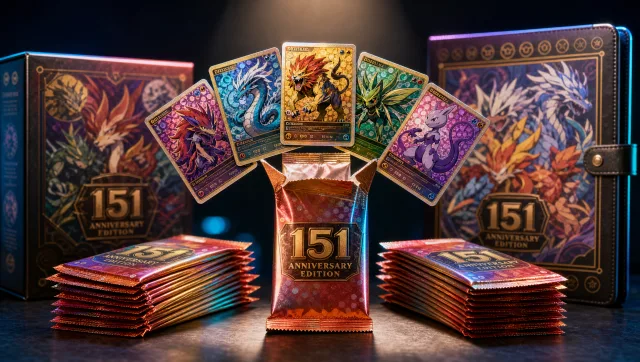
The single most-searched set-specific variant of this topic is the 151 god pack, and the answer is more nuanced than most retailer pages let on. In the Japanese Pokémon Card 151 set [SV2a], a god pack is a true ten-card all-SIR pack — every slot filled with a Special Illustration Rare from the set, which for 151 means the original Kanto-pokédex cast in full-art illustration treatment. In the English Scarlet & Violet 151 release, the equivalent is a demigod pack: a pack containing the three SIRs of a single starter's full evolution line plus seven Illustration Rares — not a fully SIR-loaded ten-card pack. The English demigod configuration is the single most-misunderstood part of this topic, because a collector counting cards in hand and expecting a fully-rare pack will assume they pulled "just a really hot booster" when they actually pulled the EN equivalent of a god pack.
How to recognize an English 151 demigod pack in your hand:
- 3 SIRs from one starter's full evolution line — for example, Bulbasaur SIR + Ivysaur SIR + Venusaur SIR, or all-Charmander line (the chase, since the Charizard line includes the 151 Charizard ex SIR we cover in depth here), or all-Squirtle line.
- 7 Illustration Rares filling the remaining slots.
- Same set logo and SV2a-EN expansion code on every card — cross-check the set code in the lower frame.
- If you have 2 SIRs from different evolution lines — for example, a Venusaur SIR and a Charizard SIR in the same pack — that's not a 151 demigod; that's a normal booster with above-average luck, and it does not carry the demigod print-anomaly designation.
For the full 151 set context — sub-sets, chase cards, and how the 151 Charizard ex SIR sits in the broader Charizard lineage we cover in our Charizard set-by-set guide — those guides go deeper than this article can on the underlying set. The upcoming Pokémon 151 pack guide walks the 151 booster product line specifically.
What are the estimated pull rates of a god pack?
The most-asked question on this topic is "what are the odds," and the only honest answer requires three caveats up front: nobody outside The Pokémon Company knows the true print-line rate, every public estimate is derived from community-shared pull logs and not from a manufacturer disclosure, and the estimates differ across the three main long-form SERP sources by enough that the only responsible read is order-of-magnitude. With that said, the estimates published by the three primary explainer sites are:
- Snkrdunk / community-aggregated estimate: approximately 1 in 600 booster packs in a set that produces god packs.
- Card-Binder estimate: roughly 1 in 700 to 1 in 1,000 booster packs.
- Eneba's published range: 1 in 500 to 1 in 1,000+, depending on the specific set.
The honest synthesis: in a set that produces god packs, the estimated print frequency lands somewhere in the 1-in-several-hundred to 1-in-a-thousand range. That is collector data about a printing-line process — useful for understanding how rare these are, not a number to base a purchase decision on. The Pokémon Company has not published an official rate, and treating community pull-log estimates as published manufacturer odds is exactly the mistake that pushes this topic toward bad framing.
A second honest note: estimated pull rates apply only to the sets that are on the confirmed list. A booster pack from a non-god-pack set has no estimated god-pack pull rate, because no god pack exists for that product. This is the bit that turns "Crown Zenith god pack" community shorthand into a measurable accuracy problem — the underlying print frequency the term implies doesn't exist for those sets.
For the broader framework on Pokémon pack rarity slots and how published pull rates actually work, see the upcoming Pokémon pack pull-rates explainer.
How to verify a god pack is real
The verification layer is the one no top-10 page builds, and it matters because a collector with a possible god pack in hand has a real decision to make. Five steps, in order:
- Identify the set. Check the set logo and the expansion code (lower-left card frame) on every card in the pack. Cross-reference against the god-pack table above. If the set isn't on the list, you didn't pull a god pack — you pulled a hot pack from a normal release, which is a real and pleasant outcome but a different one.
- Count by rarity slot. Match every card against the set's defined god-pack rule. A Japanese 151 god pack is ten SIRs across the Kanto cast. An English 151 demigod is three SIRs of one starter's evolution line plus seven IRs. Any mismatch — wrong card count, wrong rarity mix, SIRs from multiple evolution lines in 151 EN — means it isn't a confirmed god pack.
- Check for tampering on a sealed pack. Resealing is the single most common counterfeit pattern in the sealed-Pokémon-pack secondary market. A factory-crimp foil wrapper edge is uniform across its full length; a resealed pack tends to show ridging, glue residue, asymmetric edges, or a wrapper that doesn't lay perfectly flat. If you bought a "sealed god pack" from a secondary listing without third-party authentication, this is where you check it.
- Pack-weighing does not work. Every primary SERP source — snkrdunk dedicates a section to debunking it specifically — confirms that pack-weighing is not a reliable god-pack detection method for modern English or Japanese booster packs. Modern manufacturing weight tolerances and reverse-holo distribution have closed the gap weighing used to exploit.
- If considering a sealed sale: third-party authenticate first. A sealed god pack listed without third-party authentication will sell at a meaningful discount to an authenticated example. Services like PSA's authentication and CGC's sealed-product authentication are the only resale-grade verification in 2026.
Secondary-market value: sealed god pack vs cracked-and-graded
Two paths exist for any collector holding a real, verified god pack, and they have different value profiles:
| Path | What it is | Value driver | What to know |
|---|---|---|---|
| Hold sealed | Pack stays sealed; sold as a sealed-pack collectible | Authentication, set demand, novelty | Sealed god packs from popular modern sets (English 151 demigod, Prismatic Evolutions) regularly list in the high three-figure to low four-figure range on aggregate listings. Without third-party authentication, expect a meaningful discount. Once authenticated, the pack can never be cracked without destroying the authentication. Cross-check Card Ladder and current sealed-pack comp listings before pricing. |
| Crack and grade | Open the pack, submit the SIRs to PSA, CGC, or SGC for grading | Per-card graded comp values | The graded value of the individual SIRs typically exceeds the sealed-pack value for popular sets, especially at PSA 10 — the etched-foil treatments and full-art SIR finishes that fill god packs are finicky to grade, which keeps PSA 10 populations relatively constrained. Per-card grading runs $15–$25 plus shipping, with several weeks of standard-tier turnaround. Check Card Ladder trailing-90-day data for the specific cards before committing. |
The realistic synthesis: for most modern god packs (and for English 151 demigod packs specifically), cracking and grading the SIRs has historically returned more total realized value than holding sealed, because the per-card graded premium at PSA 10 is meaningful and stacks across multiple SIRs in one pack. The exception is sets where the sealed pack itself has become a collectible artifact (Prismatic Evolutions is the current example) — in those cases the sealed pack is being priced as much for the object as for the cards. Run the trailing-90 comps on the specific cards in the specific pack before deciding.
What to do if you actually pull one
A real god pack in hand is a collector decision, not a hype moment. The three paths and what each one actually trades off:
| Path | What you get | Costs / tradeoffs | Who it fits |
|---|---|---|---|
| Hold sealed (authenticate first) | A sealed pack collectible with grader-verified contents | Authentication fee; capital tied up; the pack can never be cracked later without destroying the authentication | Long-horizon collectors who value the object as much as the cards inside |
| Crack and grade individual SIRs | Slabbed singles you can vault, display, ship, or sell individually | Grading fees of $15–$25 per card plus shipping, several weeks of turnaround; ungraded raw pulls carry lower comps than graded equivalents | Collectors who want the cards usable; the realistic majority path for most modern god packs |
| Sell raw | Quick liquidity; the lowest realized total value of the three paths | The grading premium is left on the table; raw comps run materially below PSA 10 comps for the same card | Collectors who want exit, not collection |
The honest framing for path choice: hold sealed if the object is the collectible to you (Prismatic Evolutions sealed-pack collectors are an example), crack and grade if the cards are, and sell raw only if you need liquidity faster than grading-turnaround can provide it. For more on the rip-decide-vault-or-ship flow Pullmarket uses for its own pack catalog, see how Pullmarket works; for the operating-model honesty on Pullmarket Vault fulfillment and grading partners, see our trust page.
Paper-TCG god packs vs Pokémon TCG Pocket "god packs"
Pokémon TCG Pocket — the official mobile app released by The Pokémon Company — has its own "god pack" mechanic in which an in-app pack roll occasionally returns a fully-loaded pack of high-rarity digital cards. It is a different product from the paper-TCG god pack this article has covered to this point. Distribution: the paper god pack is a physical print-and-packaging anomaly that happens at the factory; the TCG Pocket god pack is a server-side digital roll governed by the app's published drop-rate logic. Ownership: paper god packs produce real physical card stock that can be graded by PSA, CGC, or SGC; TCG Pocket god packs produce app-bound digital cards that exist only inside the TCG Pocket account. Secondary market: paper god packs feed an authenticated sealed-pack and graded-singles market; TCG Pocket digital cards have essentially no comparable secondary market.
If you landed on this guide from a Pokémon TCG Pocket search, the right resource is the official Pokémon TCG Pocket drop-rate documentation maintained by The Pokémon Company — that's the published-rate page for the digital mechanic. The rest of this guide stays on paper.
Where Pullmarket fits — and where it explicitly doesn't
Pullmarket does not sell god packs. Nobody does — god packs are a print-line anomaly produced by The Pokémon Company at the factory, not a manufactured product, and no retailer or marketplace has authorized supply of them. Any listing claiming to sell a "guaranteed god pack" is either selling a sealed pack with no actual god-pack contents inside, a counterfeit-resealed pack, or a third-party-authenticated sealed god pack from a previous opening (in which case the authentication, not the seller, is what's being paid for).
What Pullmarket does sell is Pokémon packs of curated, real, third-party-graded singles, allocated against verified inventory under the Pullmarket Vault fulfillment model in Terms §5.5 — pulled slabs are managed through the Pullmarket Vault workflow. Either way, every pull is a real PSA, CGC, or SGC slab with a cert number that resolves on the grader's own website. Every Pullmarket pack publishes its full odds before purchase. Pullmarket Gems is store credit, not cash — Pullmarket is not a gambling, wagering, or cash-prize product.
The structural pivot is honest and worth saying plainly: the existing god-pack discourse is built around a 1-in-several-hundred guessing game in which the rate is estimated from Reddit pull logs and the buyer never sees a published number before opening. Pullmarket is the structural opposite of that — every pack on the Pokémon pack catalog tells you its odds up front, every pull is a real graded slab, and the decision of what to do with each pull (hold in vault, ship home, trade, or sell back for Gems store credit) sits with the collector for 24 hours per card. Details on the operating model are on our trust page, and the full rip-decide-vault flow is documented on how Pullmarket works.
Ready to Rip a Real Pokémon Pack?
The print-line god pack is one part of the Pokémon hobby — a fascinating one, but one that depends on hundreds of booster packs and a manufacturing-line coincidence. Pullmarket is the other path: a curated Pokémon pack catalog with published per-pack odds, where every pull is a real PSA, CGC, or SGC slab. Browse the live catalog with the odds in front of you, see exactly which graded slabs sit in each pack's outcome pool, and decide per pack whether to rip, hold, or pass. Real cards. Real grades. Your decision per pull.
Frequently asked questions
A Pokémon god pack is a booster pack in which every card slot has been filled with cards from the set's Illustration Rare slot or higher, produced as a printing-and-packaging anomaly at the factory rather than as a manufactured product. Confirmed god packs exist in a defined list of Japanese sets (Tag All Stars onward through Terastal Festival ex) and a smaller list of English releases (Prismatic Evolutions, Black Bolt & White Flare, Ascended Heroes, and the 151 "demigod" configuration). Nobody outside The Pokémon Company knows the exact print-line rate; community estimates put the print frequency at roughly 1 in 500–1,000 booster packs in sets that produce them.
In the Japanese Pokémon Card 151 set [SV2a], a god pack is a ten-card pack with every slot at SIR rarity — a fully Special-Illustration-Rare pack across the original Kanto cast. In the English Scarlet & Violet 151 release, the equivalent is a demigod pack: the three SIRs of a single starter's full evolution line (Bulbasaur/Ivysaur/Venusaur SIR, Charmander/Charmeleon/Charizard SIR, or Squirtle/Wartortle/Blastoise SIR) plus seven Illustration Rares — not a fully SIR-loaded ten-card pack. Counting two SIRs from different evolution lines in one English 151 pack means you pulled a hot booster, not a demigod.
Community estimates from the three primary long-form SERP sources put the print frequency at roughly 1 in 500 to 1 in 1,000 booster packs in sets that produce god packs — snkrdunk cites approximately 1 in 600, card-binder cites 1 in 700–1,000, and eneba publishes a 1-in-500-to-1-in-1,000+ range. The Pokémon Company does not publish an official manufacturer rate, so all of these are estimates derived from community-shared pull logs rather than disclosures. Treat them as order-of-magnitude collector data about a printing-line process, not as a number on which to base a purchase.
Not on the confirmed list per The Trainer Court's English and Japanese reference pages, which are the cleanest cross-reference available. Crown Zenith maps loosely to the Japanese VMAX Climax and VSTAR Universe releases (which do produce god packs in Japan), but the English Crown Zenith print isn't itself a confirmed god-pack set. Evolving Skies has no confirmed god-pack designation in any major source. When collectors say "Crown Zenith god pack" or "Evolving Skies god pack," what they almost always mean is an unusually loaded normal booster — community shorthand, not a defined print-anomaly product.
Five checks, in order. Identify the set by cross-referencing the expansion code in every card's lower frame against the published god-pack list. Count cards against that set's defined god-pack rule (a Japanese 151 god pack is ten SIRs; an English 151 demigod is three SIRs of one starter line plus seven IRs). Inspect a sealed wrapper's crimp for resealing patterns (ridging, glue residue, asymmetric edges). Skip pack-weighing — every primary SERP source confirms it doesn't work on modern packs. Third-party authenticate through PSA or CGC before any sealed resale.
It depends on the set, but for most popular modern sets — including English 151 demigod packs — the realized value of the individual SIRs graded at PSA 10 typically exceeds the sealed-pack value, because the per-card PSA 10 premium stacks across multiple SIRs in one pack. The exception is sets where the sealed pack has become a collectible artifact in its own right (Prismatic Evolutions is the current example), where sealed pricing reflects the object as much as the cards. Run trailing-90-day comps on Card Ladder before committing.
Pullmarket does not sell god packs. Nobody does — god packs are a print-line anomaly produced at The Pokémon Company's factory, not a product any retailer or marketplace can supply on demand. What Pullmarket sells is Pokémon packs of curated, real, third-party-graded singles, allocated against verified inventory under the Pullmarket Vault fulfillment model in Terms §5.5 — every pull is a real PSA, CGC, or SGC slab, and every pack publishes its full odds before purchase. Pullmarket Gems is store credit, not cash; Pullmarket is not a gambling, wagering, or cash-prize product. See our trust page for the full operating-model disclosure.

Pullmarket is an online collectible-card pack marketplace for instant online rips, graded-card chases, secure inventory, and shipping eligible cards to your door. Pullmarket helps collectors compare live packs, or learn about Pullmarket LLC.