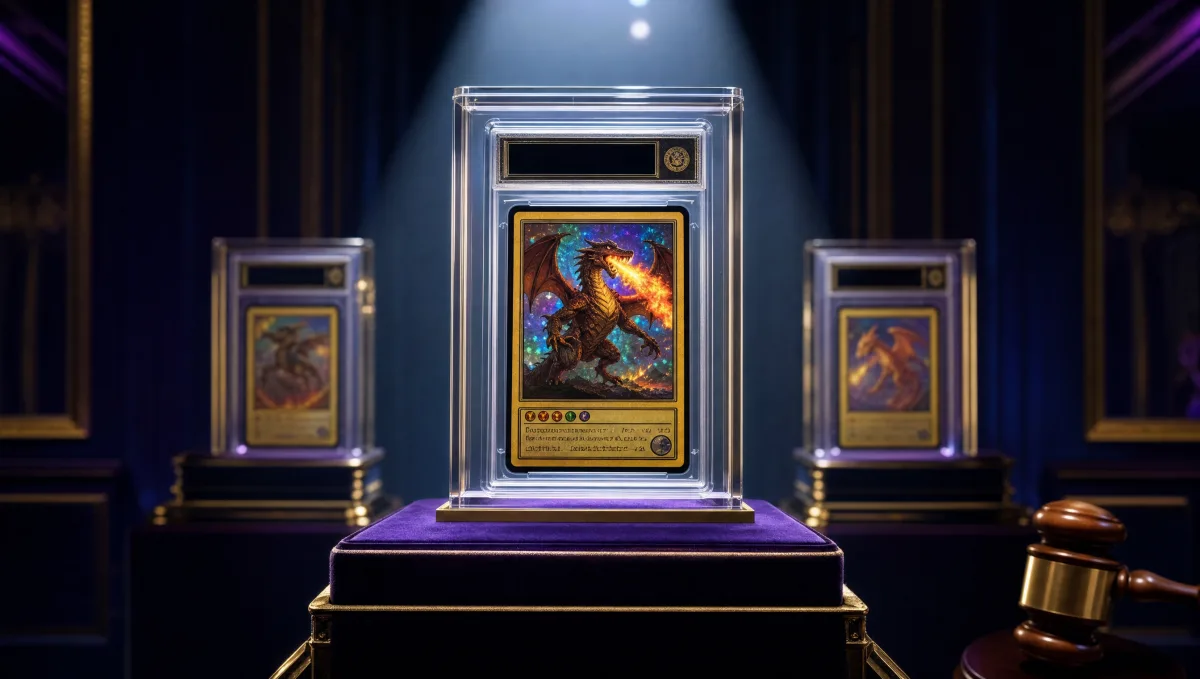
The Most Expensive Pokémon Cards Ever Sold (2026 Update)
On February 16, 2026, a PSA 10 Pikachu Illustrator sold for $16,492,000 at Goldin Auctions — certified by a Guinness World Records judge as both the most expensive Pokémon card and the most expensive trading card of any kind ever sold at auction. The seller was Logan Paul, who bought the same card privately in July 2021 for $5.275M; the buyer was AJ Scaramucci of Mucci Capital. That single sale reset the ceiling of the entire Pokémon market and made every pre-2026 "most expensive Pokémon card" list on the internet immediately stale. This is the post-Goldin top 15, ranked by confirmed public sale price, with the grade, auction house, year, and print-run context behind every entry — plus the one thing nobody else tells you: which of these cards you can actually pull in 2026, and which you can't.
Part of: Complete Pokémon Cards Guide — the pillar overview of every era from 1999 WOTC to the 2025 Mega Evolution Pokémon TCG.
The most expensive Pokémon card ever sold is a PSA 10 Pikachu Illustrator, sold at Goldin Auctions on February 16, 2026 for $16,492,000. Logan Paul sold it to AJ Scaramucci; a Guinness World Records judge on site confirmed it as the most expensive trading card of any kind ever sold at auction. Only 39 Illustrator cards were ever produced (awarded across three 1997–1998 CoroCoro Comic illustration contests in Japan), and only one PSA 10 exists in the world.
The Pikachu Illustrator at $16.49M: the new #1
The Pikachu Illustrator's February 2026 sale at Goldin closed at $16,492,000 after 97 bids, with the lot including a small diamond-encrusted pendant as a bonus item. The card is a PSA 10 — the only PSA 10 Illustrator in existence at time of sale — and the seller's profit math is one of the cleaner case studies in modern collectible appreciation: Logan Paul paid roughly $5.275M in a private July 2021 sale, then walked at $16.49M, clearing roughly $8M after Goldin's buyer/seller fees. Antique Trader, CNN, ABC News, and Fox Business all covered the sale.
The print-run context is what makes the number stick. Only 39 Illustrator cards were ever printed, awarded across three Pokémon-themed illustration contests run by CoroCoro Comic in Japan during 1997 and 1998. The card was not a tournament prize; winners' submitted artwork was published, and the card itself credits the recipient as a Pokémon Card Illustrator. By any honest definition of "rare," that's it. Per Wikipedia's collated public-record sales, the Illustrator's grade ladder is the cleanest demonstration of grade-driven value in the hobby:
- PSA 7 — $900,000 (Goldin, February 2022)
- CGC 9.5 — $672,000 (Goldin, October 2022)
- PSA 9 — $1,275,000 (private sale, June 2021)
- PSA 10 — $5,275,000 (private to Logan Paul, July 2021)
- PSA 10 — $16,492,000 (Goldin, February 2026)
That's a $900k → $16.5M spread across three grade increments — the cleanest "grade is everything" demonstration in the entire hobby. Hunting Pokémon hits in your own collection? You can't pull an Illustrator from a sealed booster (more on that below), but you can open a Pokémon pack at Pullmarket with the published odds in front of you and chase a real PSA-graded modern hit.
The 1st Edition Base Set Shadowless Charizard
The 1st Edition Base Set Shadowless Charizard is the undisputed #2 of the all-time list, and the December 2025 Heritage Auctions sale of a PSA 10 copy at $550,000 is the current public-auction record — surpassing the $420,000 PWCC PSA 10 sale from March 2022 and the $369,000 SGC 10 sale on eBay in December 2020. Heritage's December 2025 sale of a complete 1st Edition Base Set in PSA 10 condition pulled a combined $911,000 as a single consignment, with the Charizard slab anchoring the lot.
Three numbers anchor the value. PSA has graded approximately 4,993 1st Edition Base Set Shadowless Charizards to date; of those, 124 are PSA 10s per the public pop report. The card is identifiable by the "Edition 1" stamp under the art window, the missing drop-shadow behind the art (the "shadowless" tell), and the 4/102 set number. Critically, the non-shadowless 1st Edition Charizard does exist as a printing-variant footnote and is not worth what the shadowless command — the article means shadowless every time, and so does the market. Authentication, value movement, and counterfeit-spotting are covered in depth in our 1st Edition Charizard guide and our Base Set Charizard guide; the Charizard cornerstone guide walks the full lineage from 1999 to the current Phantasmal Flames era.
The PSA 9 vs PSA 10 spread tells the same grade-is-everything story as the Illustrator: PSA 9 1st Ed Shadowless Charizards trade in the $30,000–$60,000 range on Card Ladder's trailing-90 comps, while the PSA 10 has tripled the public-auction record in three years. You won't pull one of these from a 2026 booster — they were printed in 1999. Pull this card's modern lineage in a real Pullmarket pack instead.
Trophy Pikachu cards (1997–1998 Japanese tournaments)
The Trophy Pikachu cluster is the most-misunderstood section on every top-15 list in the SERP. There isn't one Trophy Pikachu — there are three, all from the 1997–1998 Japanese Lizardon Mega Battle and 1st Official Tournament series, and the price spread between them is enormous. Trophy Pikachus are awarded cards, not pulled cards; estimates put the No. 1 Trainer (Gold) population at fewer than ten copies known to exist, with most held privately.
| Trophy card | Award | Year | Notable public sale | Auction house |
|---|---|---|---|---|
| No. 1 Trainer Pikachu (Gold) | 1st place, Lizardon Mega Battle | 1998 | $3,000,000 (PSA 9, Sept 2025, reported private) | Reported private |
| No. 1 Trainer Pikachu (Gold) | 1st place, various | 1998 | $450,000 (PSA 9, December 2025) | Heritage Auctions |
| No. 2 Trainer Pikachu (Silver) | 2nd place, Lizardon Mega Battle | 1997–98 | $444,000 (PSA 10, September 2023) | Goldin Auctions |
| No. 3 Trainer Pikachu (Bronze) | 3rd place, 1st Official Tournament | 1997 | $300,000 (PSA 8, April 2023) | Heritage Auctions |
The reported $3M September 2025 sale of a No. 1 Trainer Gold is the highest figure attached to any Trophy Pikachu — note that it's reported rather than fully public; the December 2025 Heritage No. 1 Trainer sale at $450,000 is the cleanest public comp on the same card type. Heritage Auctions and Goldin host essentially all public Trophy Pikachu sales of record. None of these cards will ever appear in a modern pack — they were awarded in person at sponsored tournaments in 1990s Japan. The realistic chase path is opening a real Pullmarket pack; Trophy Pikachu is the museum case.
Trophy Blastoise: the 1998 Commissioned Presentation Galaxy Star
The Trophy Blastoise — formally the Blastoise Commissioned Presentation Galaxy Star Holo — is the deep-cut Wargamer and Dexerto cover in two sentences and Yahoo skips entirely. A CGC 8.5 copy sold at Heritage Auctions in January 2021 for $360,000. The print run is two copies known: Wizards of the Coast commissioned the card as a presentation piece for the original Japanese-to-English Pokémon TCG launch negotiations, and only two are documented in collector hands today.
The card is a 1:1-type unicorn for two reasons. First, the print run of two makes it effectively non-tradeable at any cadence; both known copies have changed hands once each in the public record. Second, the cultural provenance — the actual artifact from the moment Pokémon TCG was being licensed for the West — gives it a museum-piece narrative that the auction houses lean into. If you're hunting a Blastoise to chase today, the 1999 Base Set 1st Edition Blastoise in PSA 10 (covered below) is the realistic version. The modern Blastoise lineage lives inside Pullmarket's Pokémon pack catalog.
The Tropical Mega Battle promos (1999–2000)
The Tropical Mega Battle cluster is the section the news-driven SERP entries skip entirely, and the section a real collector wants to read. Held at the Hilton Hawaiian Village in Honolulu in 1999 and again in 2000, the Tropical Mega Battle invited the top finishers from each region's Pokémon TCG championship and awarded a series of trophy and participation promos that are now among the rarest non-Illustrator cards in the hobby.
The headline lots:
- 1999 Tropical Mega Battle No. 1 Trainer — only a small handful are known; the CGC Pristine 10 is the only top-grade copy on record and has not crossed the public auction block. Mid-grade PSA copies trade in the $50,000–$80,000 range per PSA Auction Prices Realized's trailing data.
- No. 2 Trainer Tropical Mega Battle — an active $150,000+ listing surfaced on Fanatics Collect in March 2026; the card's last public sale comp sits in the high five figures.
- Tropical Wind promo — awarded to all tournament participants, far higher production than the Trainer cards. PSA 10 copies trade in the $10,000–$30,000 range depending on year and event.
- Lucky Stadium promo — the lower-tier participant card; PSA 10 comps sit in the $3,000–$8,000 range.
Heritage Auctions, Goldin, and Fanatics Collect host essentially every public Tropical Mega Battle sale. These are not pullable cards either — they were awarded at one specific tournament series in 1999 and 2000. Want the modern equivalent of the "trophy chase" feeling without flying to Hawaii in 1999? Hunting a graded slab? Open a Pullmarket pack and the odds are published.
Modern grails: the cards normal collectors actually chase
Everything above this point is trophy, promo, or one-of-X. This is the inflection — the modern PSA 10 grails that normal collectors can realistically chase through grading, sealed product, or platform-curated packs. Every number below traces to Yahoo Finance's 2026 reporting, Wikipedia's collated public-sale list, Card Ladder's trailing comp data, and PSA Auction Prices Realized:
- 2000 Lugia Neo Genesis 1st Edition — only 41 PSA 10 copies graded out of the entire 1st Edition Neo Genesis Lugia population. A BGS Pristine 10 sold at $144,300 (PWCC/Fanatics Collect, May 2021), and PSA 10s trade in the $80,000–$130,000 range on Card Ladder's trailing comps.
- 2003 Crystal Charizard (Skyridge) PSA 10 — approximately $40,800 on the most recent public comp.
- 2006 Charizard Gold Star (EX Dragon Frontiers) PSA 10 — approximately $60,000.
- 2005 Rayquaza Gold Star (EX Deoxys) PSA 10 — approximately $49,000.
- 2004 Torchic Gold Star (EX Team Rocket Returns) PSA 10 — $43,200 on a recent comp.
- 2007 Umbreon Gold Star (POP Series 5) PSA 10 — approximately $48,500.
- 1999 Blastoise Base Set 1st Edition PSA 10 — $88,000–$138,000 range, comp-dependent.
- 1999 Chansey Base Set 1st Edition PSA 10 — approximately $55,000.
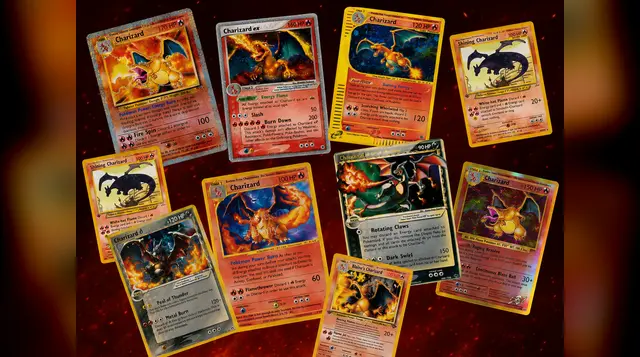
The Charizard rabbit hole runs deep here — the Charizard cornerstone guide walks the full set-by-set lineage, the rainbow Charizard price guide covers the rainbow-rare variants across modern sets, and the shiny Charizard guide covers the shiny-variant chase. These are the cards a normal collector can realistically chase — five-figure outcomes on cards that exist in real graded populations rather than seven-figure outcomes on cards held in single-digit collector hands. Find a graded Charizard in a real Pullmarket pack — that's the modern path.
What actually makes a Pokémon card worth this much
The news listicles skip the "why" — every number above traces to four real, compoundable value drivers, in order of impact:
- Print run constraint. Illustrator: 39 copies. Trophy Pikachu (Gold): fewer than ten known. Trophy Blastoise: two known. Tropical Mega Battle No. 1 Trainer: a handful. 1st Edition Base Set Shadowless: ~4,993 graded across all grades, only 124 in PSA 10. Print run is the foundation; everything else is a multiplier.
- PSA / CGC / SGC grade. The Illustrator's PSA 7 → PSA 10 ladder ($900k → $16.5M) is the cleanest demonstration in the hobby. PSA cert numbers resolve directly at psacard.com, CGC at cgccards.com, and SGC at gosgc.com. A grade isn't a vibe — it's a verifiable third-party assessment that compounds with every other value driver.
- Provenance. Logan Paul's Illustrator is more valuable because of the Logan Paul story; the same card with no celebrity chain of custody would still sell, but not at $16.49M. Documented provenance via Goldin, Heritage Auctions, or PWCC / Fanatics Collect lot history is part of the price.
- Cultural moment. The 2020–2021 Pokémon 25th-anniversary boom reset the entire market floor; the February 2026 Goldin sale was the second reset event. Markets reset; markets correct.
For trailing-comp data on any specific card, Card Ladder and Beckett are the hobby's two most-used aggregate pricing sources; Sports Collectors Daily is the long-running narrative source on market cycles. One caveat the SERP doesn't say out loud: card prices can correct, hard, and have. The modern hype-cycle slab that ran from $300 to $3,000 in 2020 and back to $400 in 2024 is a real pattern in the hobby — chase the cards you actually like, not the comp graph.
Cards you can actually pull in 2026 (the realistic chase)
Honest framing: you will not pull an Illustrator, a Trophy Pikachu, a 1st Edition Shadowless Charizard, or a 1999 Tropical Mega Battle No. 1 Trainer from any sealed 2026 booster, ETB, UPC, or modern collectible. Period. Those cards were awarded or printed in the 1990s and early 2000s and exist in fixed populations that do not refresh with new product. What you can pull from modern Pokémon TCG product (sealed boxes, UPCs, and platform-curated packs like Pullmarket's) and what those pulls are worth in PSA 10:
- Charizard ex (Obsidian Flames 2023, Pokémon 151 2023, Phantasmal Flames 2025) — the modern Charizard ex family is the most-chased modern Pokémon hit in the hobby. Per-set deep-dives: Charizard ex guide, Charizard 151 guide, Charizard Obsidian Flames guide, Charizard Phantasmal Flames guide, and the Charizard Paldean Fates guide.
- Mega Charizard X ex (Phantasmal Flames 2025 + UPC promos) — the November 2025 Mega Charizard X ex Ultra-Premium Collection (MEP #023 promo) and the matching set-level cards. Walked in full in our Mega Charizard ex guide and the Charizard UPC guide.
- Charizard VMAX rainbow / alt arts (Champion's Path, Shining Fates) — covered in the Charizard VMAX guide.
- Pokémon 151 Mew ex hyper rare, modern Lugia / Mewtwo / Rayquaza alts, and special illustration rares — the modern hyper-rare ladder runs four to low-five figures at PSA 10 for the best chases.
The point: modern hits are four- and low-five-figure outcomes at PSA 10, not seven- and eight-figure outcomes. But they are real, current pulls from product on shelves today. Land a Charizard ex by browsing Pullmarket's Pokémon packs — the platform path is straightforward.
Pull modern Pokémon hits on Pullmarket (published odds, real slabs)
Pullmarket's Pokémon pack catalog is the collector path for the second half of this article — the realistic-chase half. The model is straightforward and the language is precise; every word below is operating policy, not marketing:
- Every pack publishes its odds before purchase. Full odds transparency. You see the possible-outcome pool and the rate before you commit a single dollar.
- Every pull is a real, third-party-graded physical card. PSA, CGC, or SGC slab. Every slab carries a cert number that resolves on the grader's own website — PSA, CGC, SGC.
- Pullmarket Vault custody, honestly stated. Per Terms §5.5, pulled slabs are managed through the Pullmarket Vault workflow. Either way, every pull is backed by a real third-party-graded slab.
- Your decision per pull. Within 24 hours, you decide: hold in vault, ship the physical card home, trade it, or sell it back for Pullmarket Gems store credit at a 105% Market Estimate sellback. Full walkthrough on how Pullmarket works.
- Gems is store credit, not cash. Pullmarket Gems is store credit per Terms §9.1 — explicitly not cashable. Pullmarket is not a sweepstakes, lottery, or wagering product. The trust framing is laid out in full on the is Pullmarket legit page.
- Substitution policy is published. Per Terms §7, if the exact card pulled cannot be fulfilled as originally displayed, Pullmarket fulfills with the same item from another channel, a comparable collectible of equal or greater market value, or another remedy required by applicable law.
The product is collecting and ripping real graded Pokémon cards. That's it.
Pop-culture context: how the Pokémon market got to $16M
The road from a $300 1999 Base Set Shadowless Charizard to a $16.49M PSA 10 Illustrator runs through three distinct market resets, and the news SERP tells two of them poorly. The honest version is three beats:
2020–2021 — the reset. Logan Paul's October 2020 boxing walkout in a $150,000 PSA 10 1st Edition Charizard around his neck triggered the cultural inflection. COVID-era collector demand met the Pokémon 25th-anniversary marketing push; retailer shelves got stripped bare; Target temporarily pulled Pokémon product from in-store sales in May 2021 over safety incidents at restocks. PWCC and Goldin auction records reset 3–4× year-over-year on flagship vintage. The Illustrator went from a $233,000 PSA 8 sale in October 2019 to $5.275M in private PSA 10 sale in July 2021 — a ~20× appreciation across grade and 21 months.
2022–2024 — correction and bifurcation. Modern hype-cycle cards (most 2020–2021 ex / V / VMAX chases) corrected hard once the supply chain caught up; vintage grails (Illustrator, 1st Ed Shadowless Charizard, Trophy Pikachu) kept appreciating. Yahoo Finance's 2026 reporting frames the period as a "bifurcation" — the market split into two markets, with one correcting and one compounding.
February 2026 — the second reset. The Goldin Illustrator sale at $16.49M proves the top of the vintage market is uncapped. The grail-tier Pokémon market in 2026 is functioning like the high-end Picasso or vintage-watch market — a small number of buyers chasing a fixed number of objects, with auction-house provenance as the price floor. The modern market behaves nothing like that. Sports Collectors Daily has tracked the arc in real time. Find your card in a Pullmarket pack — that's the modern-collector lane.
Where these cards actually sell (auction houses, not eBay BINs)
Every seven- and eight-figure Pokémon card sale on the top 15 happened at a named auction house with documented provenance. The high end of the hobby does not transact on random eBay buy-it-nows for a reason — fees, authentication, and chain-of-custody matter at that price tier:
- Goldin Auctions (goldin.co) — premier trading-card auction house. Hosted the February 2026 Illustrator sale and multiple Trophy Pikachu sales of record.
- Heritage Auctions (ha.com) — broad collectibles auction house. Hosted the December 2025 1st Ed Shadowless Charizard PSA 10 sale at $550,000, the January 2021 Trophy Blastoise sale at $360,000, and the No. 3 Trainer Pikachu Bronze sale.
- PWCC / Fanatics Collect (fanaticscollect.com) — high-volume marketplace and premier auctions. Hosted multiple modern-grail sales including the BGS Pristine 10 Lugia Neo Genesis at $144,300.
- eBay — primarily a mid-market venue. Grail-tier sales happen occasionally (the December 2020 SGC 10 Shadowless Charizard at $369,000 was an eBay BIN), but those are the exception. Always verify cert numbers via PSA, CGC, or SGC before transacting on eBay at any price tier.
At any of these price points, every card is third-party-graded, every grade resolves on the grader's own site, and every provenance is documented. Skip the auction-house wait — open a Pokémon pack on Pullmarket for the modern path.
Rarest vs most expensive: not the same list
The Pikachu Illustrator is both the rarest and the most expensive Pokémon card — 39 copies, $16.49M — but the two categories diverge fast after that. Most expensive is set by what's actually changed hands at public auction; rarest is set by print run, regardless of whether the card ever sells. Several cards rarer by print run than entries on this list rarely surface for public sale, which is exactly why their dollar comps don't crack the top 15:
- Master's Key (2010) — ~34 copies, awarded at the Pokémon World Championships. Rarer than the Illustrator; almost never publicly sold.
- Pokémon Snap Contest Magikarp (1998) — ~20 copies awarded as part of a Japanese photo contest. Rarer by print run than most of the top 15.
- CoroCoro Shining Mew Trophy (1998) — believed unique. Single-copy print run, never sold publicly.
- Family Event Trophy Kangaskhan (1998) — 3–7 copies known. Rarer than the Trophy Blastoise.
The full rarity breakdown — population numbers, contest histories, and the deeper unicorns — lives in our rarest Pokémon cards guide. This article ranks by sale price; the rarest article ranks by print run. Together they're the complete map.
Ready to Rip a Real Pokémon Pack?
You can't pull an Illustrator, a Trophy Pikachu, a 1st Edition Shadowless Charizard, or a Tropical Mega Battle No. 1 Trainer out of a sealed 2026 booster — that's the honest read on every card above. What you can do is rip a real Pokémon pack with the odds published in front of you, get a real third-party-graded slab allocated to your account, and decide per pull whether to hold, ship, trade, or sell back. Modern Charizard ex, Mega Charizard X ex, alt-art SIRs, the 151 Mew ex hyper rare — those are the realistic chases, and they're sitting in Pullmarket's curated packs right now.
Frequently asked questions
The most expensive Pokémon card ever sold is a PSA 10 Pikachu Illustrator, sold at Goldin Auctions on February 16, 2026 for $16,492,000 by Logan Paul to AJ Scaramucci of Mucci Capital. A Guinness World Records judge on site confirmed it as both the most expensive Pokémon card and the most expensive trading card of any kind ever sold at auction. The card is the only PSA 10 Illustrator in existence; only 39 Illustrator cards were ever produced across three 1997–1998 CoroCoro Comic illustration contests in Japan. CNN, Antique Trader, ABC News, and Fox Business all covered the sale.
The Pikachu Illustrator's value depends almost entirely on grade. The only PSA 10 sold for $16,492,000 at Goldin in February 2026. A PSA 9 sold privately for $1,275,000 in June 2021; a PSA 7 sold for $900,000 at Goldin in February 2022; a CGC 9.5 sold for $672,000 at Goldin in October 2022. Only 39 Illustrator cards were ever produced, awarded across three 1997–1998 Japanese illustration contests. Even an Illustrator in PSA 5 or 6 would be expected to clear six figures at a major auction house given the print-run constraint.
A PSA 10 1st Edition Base Set Shadowless Charizard sold for $550,000 at Heritage Auctions in December 2025 — the public-auction record, surpassing the $420,000 PWCC sale from March 2022. PSA 10 copies typically trade in the $300,000–$550,000 range depending on the venue. PSA 9 copies sit in the $30,000–$60,000 range per Card Ladder's trailing comps. PSA has graded approximately 4,993 1st Edition Shadowless Charizards across all grades, with only 124 in PSA 10. The non-shadowless 1st Edition variant exists but is worth substantially less.
By print run, the Pikachu Illustrator (39 copies) and Master's Key (~34 copies awarded at the Pokémon World Championships) are among the rarest. Single-copy and 3–7-copy unicorns also exist — the CoroCoro Shining Mew Trophy (believed unique), the Family Event Trophy Kangaskhan (3–7 copies), and the Pokémon Snap Contest Magikarp (~20 copies). The rarest non-trophy card is debated. The full rarity breakdown, with population numbers, contest histories, and authentication notes, lives in our rarest Pokémon cards guide.
Three compounding reasons. First, a print run of 39, awarded across three 1997–1998 CoroCoro Comic illustration contests in Japan. Second, only one PSA 10 exists in the world — the grade ladder ($900k PSA 7 → $1.275M PSA 9 → $16.49M PSA 10) is the cleanest demonstration of grade-driven value in the hobby. Third, provenance — Logan Paul's 2021 private purchase and 2026 Goldin resale created the celebrity story arc and the Guinness World Records confirmation that anchors the $16.49M number culturally as well as financially.
None of the grail-tier cards on this list are pullable from any modern sealed product — they were awarded or printed in the 1990s and early 2000s. What you can pull from modern Pokémon TCG product (sealed boxes, ETBs, UPCs, and platform-curated packs): modern Charizard ex variants from Obsidian Flames 2023, Pokémon 151 2023, Paldean Fates 2024, and Phantasmal Flames 2025; the Mega Charizard X ex from the 2025 UPC; the 151 Mew ex hyper rare; and modern alt-art special illustration rares. These are four- and low-five-figure outcomes at PSA 10, not seven-figure outcomes — but they are real, current pulls.
Goldin Auctions, Heritage Auctions, and PWCC / Fanatics Collect handle essentially every six- and seven-figure Pokémon card sale of record. Goldin hosted the February 2026 Illustrator sale and multiple Trophy Pikachu sales; Heritage hosted the December 2025 1st Ed Shadowless Charizard PSA 10 sale and the Trophy Blastoise sale; PWCC / Fanatics Collect hosts high-volume marketplace activity and the modern-grail tier. eBay occasionally hosts a record-breaking buy-it-now (the December 2020 SGC 10 Shadowless Charizard at $369,000) but is primarily a mid-market venue. Always verify cert numbers via PSA, CGC, or SGC.
The Pokémon card market has bifurcated since 2022. Vintage grails (Illustrator, 1st Ed Shadowless Charizard, Trophy Pikachu) have kept appreciating; modern hype-cycle cards run faster correction cycles, sometimes giving back two-thirds or more of their 2020–2021 peaks. Pullmarket doesn't make investment claims — any dollar figure on this page is a recorded sale, not a forward forecast. Card values move. Chase the cards you actually like, verify every cert at the grader's website, and treat the comp graph as historical data rather than a predictor.



Pullmarket is an online collectible-card pack marketplace for instant online rips, graded-card chases, secure inventory, and shipping eligible cards to your door. Open card packs online at Pullmarket, or learn about Pullmarket LLC.